
7 great financial lessons you can learn from The Art of Spending Money by Morgan Housel
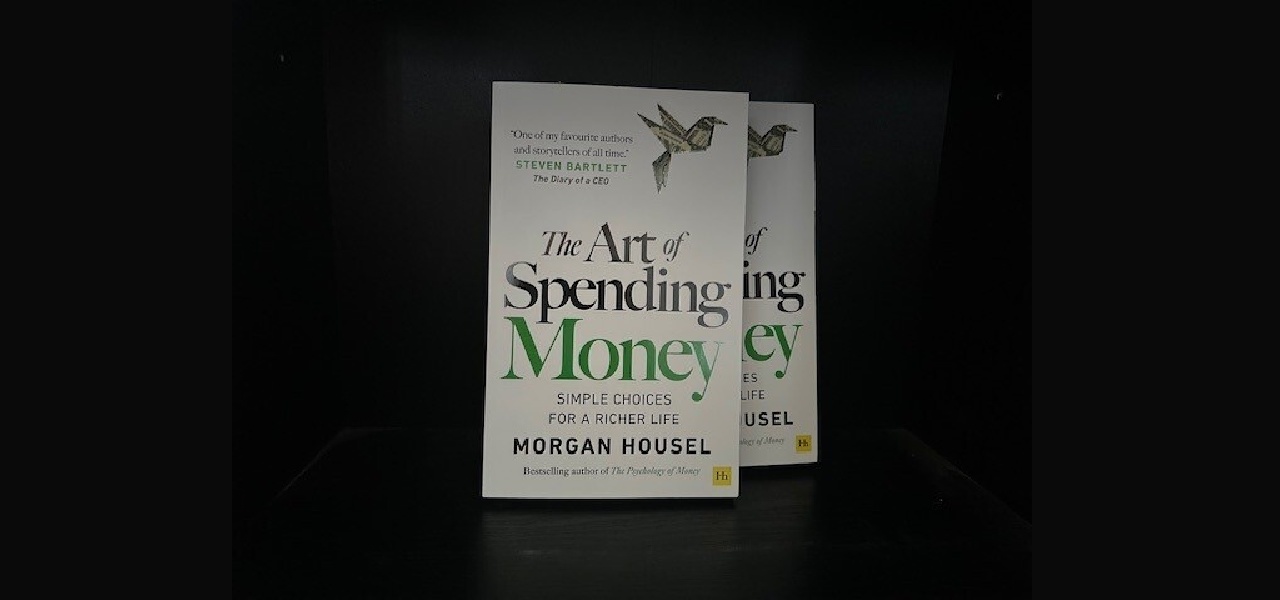
Last year, I read a book by Morgan Housel called The Art of Spending Money, in which he explores the relationship between wealth, happiness, and money.
You may have read my previous article I published about his best-known work – The Psychology of Money –which has sold a remarkable 3 million copies.
In The Art of Spending Money, Housel’s underlying theme is that while money gives you the means to be comfortable, it can’t always buy personal happiness.
Because of that, he suggests that it becomes crucial to understand the psychological triggers that decide how you spend your money. By doing so, you can ensure that your financial decisions are driven by your personal values and what matters to you, rather than by your impulses.
Here are seven key messages that I’ve taken from the book. I believe that understanding and following these could go some way to helping you make better judgements in terms of how you manage your wealth.
1. Bring the same mindset to your money that you do to your life
Housel suggests that three key factors can often determine how successful and happy your life can be. These are:
- An awareness of your circumstances
- Being patient and not rushing to judgement
- Finding the right balance between your needs and your wants.
He then points out that success in managing your money can often derive from the same three attributes.
By training yourself to spend your money with the watchwords of awareness, patience, and balance, you could be taking a big step towards both financial security and a life of happiness and fulfilment.
2. It’s important to establish what your personal “enough” is
In the book, Morgan Housel talks a lot about frugality.
But importantly, he suggests you see it as a strength, rather than something that comes from necessary self-denial.
He also maintains that it’s something to actually aim for, rather than be forced through restricted opportunity.
In his estimation, frugality can have the positive trait of allowing you to recognise when enough is truly enough, which in turn could give you the scope to make better financial choices.
Developing a mindset whereby you are content with less can not only help your long-term wealth, but also your wellbeing as it could free up financial headroom for better choices.
3. See money as a means to buy freedom
One of Housel’s common themes that he reiterates in The Art of Spending Money is the idea of money being a source of freedom.
By focusing your spending on time-saving options, you could create more time to make choices, rather than often feeling rushed and under pressure.
He questions the wisdom of working excessive hours in order to afford a lifestyle that you have no time to actually enjoy.
He argues that money should be a tool for living a better life rather than simply being accumulated excessively.
For many, this is not about cutting back on work, but about mindset. It is about recognising where choices exist, however small, and using your money intentionally rather than letting it quietly dictate priorities.
4. Try to avoid impulse purchases
A common feature in many financial self-help books is looking at ways of controlling your spending and cutting out impulse purchases.
Housel encourages pausing before making a big financial commitment that you could potentially soon regret. During this time, he suggests you ask yourself whether this will actually make you happier in the long term once the dopamine rush provided by such a purchase has worn off.
He also recommends asking why you are making the purchase. Is it for yourself, or to try and impress other people?
5. Always think about your intentions, not your expectations
When I was reading about this point in Housel’s book, I was reminded of President Kennedy’s famous quote about asking not what your country can do for you, but what you can do for your country.
Effectively, Housel is making the same point in that it is better to be motivated by what you intend to do, rather than what you expect to happen.
With a more flexible approach, you’ll be able to adapt and keep an open mind in terms of the outcomes you want. He sees this as a far more preferable state of mind than making a series of assumptions about outcomes that you may not enjoy.
6. Look to grow your emotional wealth
Housel highlights the benefits that you could gain by giving money to other people – be they family, your local community, or charities.
He uses the expression “emotional wealth” to describe the long-term benefits you could gain from your generosity, and how they can far exceed the pleasure you can get from personal spending.
He stresses that it’s better to make charitable donations to improve your emotional wellbeing, rather than simply to salve your conscience.
7. Focus on what you’ve got, not what you want
In the book, Housel advises crafting a financial strategy based on your own goals and objectives, not someone else’s.
He stresses that spending money to try to impress, or keep up with, other people will rarely provide you with any long-term happiness.
I previously wrote about this in terms of why you should stop moving your goalposts and how doing so, through constant material acquisition, can often lead to a scenario where you are never entirely happy, regardless of your wealth.
Get in touch
If you would like to talk about your own financial plan or any of the issues raised in this article, please get in touch.
You can call me on 07769 156 250.
Please note
This blog is for information purposes only and does not constitute advice or a personalised recommendation. The information is aimed at individuals only.
Please do not act based on anything you might read in this article. This blog is based on our understanding of current and proposed legislation, which may change.
The value of your investments (and any income from them) can go down as well as up and you may not get back the full amount you invested. Past performance is not a guide to future performance.
Investments should be considered over the longer term and should fit in with your overall attitude to risk and financial circumstances.
Foster Denovo Limited is authorised and regulated by the Financial Conduct Authority. FCA Reg No. 462728.