
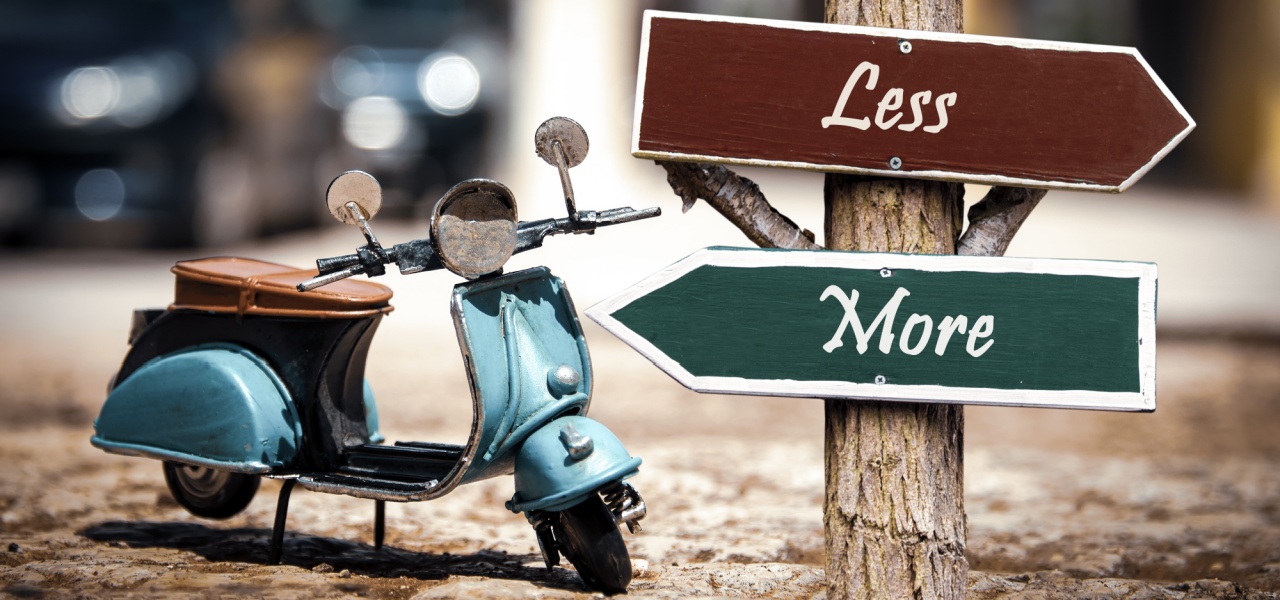
Improving your wellbeing by harnessing the power of minimalism
If I had to sum it up in just a few words, I’d suggest the aim of financial planning is to provide you and your loved ones with valuable peace of mind through growing your wealth.
However, I think there’s a frequent temptation to see wealth and asset accumulation as the be-all and end-all while losing sight of the wider picture.
Wealth can define you in terms of the lifestyle you lead, but your wellbeing and happiness are arguably equally important. Furthermore, they aren’t necessarily dependent on how much money you have and the value of your assets and possessions.
This is particularly important once you have retired and no longer have work as a key determinant in defining who you are and what you do.
Constantly acquiring possessions can leave you feeling unfulfilled
It often appears to be the case that the more money we have and the more possessions we accrue, the more we think we need.
One effect of this is something I’ve written about previously – continually moving your goalposts to set new targets because you remain dissatisfied and unfulfilled.
Wealth can certainly provide you with an element of security, allowing you to live comfortably. However, the continual accrual of tangible assets can actually end up making you more unhappy once the dopamine rush of a purchase has worn off.
It can commonly create the scenario where you are continually trying to “keep up with the Joneses”, or get ahead of them, through repeated acquisition and a desire to satisfy your competitiveness.
I’ve seen this described as the “prosperity paradox”.
It’s important to understand what really matters to you
As with many decisions around your lifestyle and attitude to wealth, thinking about your priorities is a key starting point when it comes to your relationship with money.
A clear idea of your personal values can mean you will find it easier to live a more meaningful and fulfilling life. Especially if you can combine this with worrying less about what other people are doing or what they are thinking about you.
By doing these, you’ll be able to concentrate on your long-term happiness and wellbeing, and realise that maybe your drive for the accrual of possessions is stopping you from being happy.
In reality, real financial freedom isn’t about being able to buy everything you want. Instead, it’s about realising you don’t need everything in order to be truly happy.
A more minimalist attitude can give you greater happiness
By reducing your focus on acquisition, you can create more time and mental bandwidth to devote to the things that matter, activities you’ll enjoy, and the creation of lasting memories.
In a previous article, I wrote about “memory dividends” and the benefits they can provide for you and your loved ones in some detail.
By developing a minimalist approach to your lifestyle, you are likely to find that spending less and thinking more about what you are spending will improve your quality of life.
You will benefit from a sense of lasting fulfilment and purpose, rather than depending on short-term hits. You will also start to appreciate the pleasure you get from helping others.
Minimalism often comes from focusing on what really matters to you. The big starting point is to appreciate that financial freedom doesn’t begin with acquiring more money. Instead, it’s about having less desire for money.
5 steps on the road to a more minimalist lifestyle
Obviously, your route to a more minimalist lifestyle will revolve around your own choices and priorities.
However, here are five suggestions which might help get you started:
- Spend some time deciding what actually makes you happy.
- If you’re making a discretionary purchase, ask yourself who it’s really for.
- Look to reduce your regular monthly outgoings.
- Think about giving back in relation to your local community.
- Stop worrying about the Joneses.
Perhaps the last of these is the real secret to a successful minimalist outlook. It can seem natural to compare yourself to others. Being able to concentrate solely on your life and happiness, rather than what others do, is a massive step forward on the road to a life of genuine wellbeing.
There’s no need to go overboard with the minimalism
In a culture that defines success by accumulation, the idea of buying less sounds like going backwards.
This starts to seem understandable when you consider that heading towards a more minimalist approach means you are going against the combined power of consumer advertising, as well as humans’ natural acquisitiveness.
However, it’s important to bear in mind that you don’t need to deprive yourself and inhibit your enjoyment.
Minimalism doesn’t have to mean forced frugality. It’s more a matter of finding an effective balance that suits you and your family.
Get in touch
If you would like to talk about your own financial plans, or any of the issues raised in this article, please get in touch.
You can call me on 07769 156 250.
Please note
This blog is for general information only and does not constitute advice. The information is aimed at retail clients only.
Please do not act based on anything you might read in this article. All contents are based on our understanding of HMRC legislation, which is subject to change.