

Why 3 strong years of investment growth are no guide to what will happen in 2026 and why it doesn’t matter
Global equity investors have enjoyed a remarkable run.
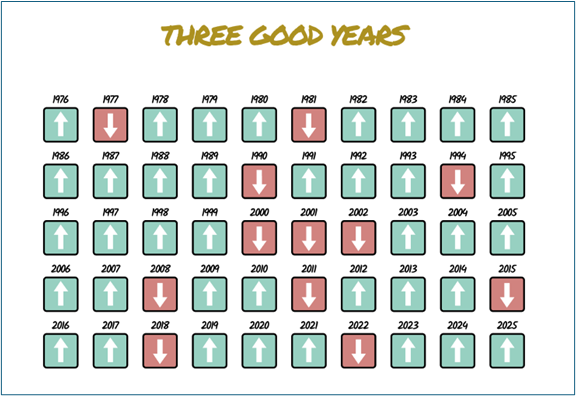
The S&P 500, a major US stock market index, rose 24% in 2023, another 23% in 2024, and 16% in 2025. With long-term average returns in the 8-10% range, three consecutive years of above-average performance are something to be grateful for.
This time last year, I discussed with many clients the possibility that downside volatility could return after two strong years. It did.
Tariff concerns drove a sharp decline in March and April, testing investors’ resolve worldwide. But markets recovered strongly, and those who stayed the course benefited.
We started 2026 with the same mindset, and recent events in the Gulf have challenged investors in the same way.
Markets have historically tended to revert to their long-term averages
After three above-average years, you may well be asking whether markets have become “overvalued”. It’s a reasonable question. Unfortunately, it’s one that nobody can answer with certainty.
What we do know is that markets tend to revert to their long-term averages over time. This isn’t pessimism. It’s simply how markets have always behaved. Extended periods of strong returns are often followed by periods of more modest growth or temporary declines that bring valuations back in line.
Simply put, a period of below-average returns would be historically normal after the run we’ve enjoyed. But “normal” doesn’t mean “predictable”.
We have no way of knowing when such a period might begin, how long it might last, or what might trigger it.
Preparation beats predicting
Current market leadership is concentrated in technology and AI companies. Disappointing earnings from these giants could certainly trigger a change in sentiment. But the decline we experienced in early 2025 was driven by tariff concerns, something very few people were discussing a year earlier.
The trigger for the next market decline is almost always something different from what you may expect.
This is precisely why I always preach the importance of preparing rather than predicting. Decades of evidence show that trying to time market exits and entries can be fraught with danger.
Planning tends to work better than speculation
Given all this, you might be tempted to make changes to your portfolio now. Perhaps to shift to a more “defensive” position in anticipation of a potential decline.
Investors are often better served by resisting this urge. Your portfolio should already be designed around your long-term goals and your ability to weather temporary declines. Making changes based on feelings about where markets might head in the short term is speculation rather than planning.
Instead, I’d suggest you ensure you have sufficient cash available for any known short-term expenses. This simple step prevents you from being forced to sell investments at an inopportune time. Beyond that, your long-term investments should remain exactly that: long-term investments.
The irony of good preparation is that it often looks like doing nothing. The financially literate understand this and find peace in it.
Ignore the headlines and focus on your long-term plans
Whether 2026 brings continued gains or a temporary setback, your long-term trajectory remains unchanged. Historically, declines have tended to be temporary. The world’s great companies have delivered enduring growth over the long term.
The goal isn’t to predict the future but to remain invested through it. We’ve navigated uncertain periods before. The experience of 2025 reminded us that this approach works.
I remain confident in the wealth-building power of owning shares in the world’s leading businesses. These companies will continue to innovate, adapt, and grow their earnings regardless of what headlines dominate the news cycle.
Get in touch
If you have any concerns about your situation or would like to review your investment portfolio, please get in touch.
You can call me on 07769 156 250.
Please note
This blog is for information purposes only and does not constitute advice or a personalised recommendation. The information is aimed at individuals only.
Please do not act based on anything you might read in this article. This blog is based on our understanding of current and proposed legislation, which may change.
The value of your investments (and any income from them) can go down as well as up, and you may not get back the full amount you invested. Past performance is not a guide to future performance.
Investments should be considered over the longer term and should fit in with your overall attitude to risk and financial circumstances.